Advanced Operation Guide: HICLOVER Waste Incinerators for Industrial and Medical Waste Management
Introduction: Engineering Precision, Compliance, and Reliability in Modern Waste Incinerators
In the evolving landscape of industrial waste management, waste incinerators such as the HICLOVER system have become synonymous with engineered reliability and regulatory compliance. Across Africa, Asia, and beyond, procurement managers consistently benchmark these solutions against medical incinerator operating temperature standards—with primary chambers engineered to sustain 850–1100°C and secondary chambers designed for 1100–1300°C, compliant with WHO and EU directives. These technical standards form the bedrock for infection control, carbon emission minimization, and optimal combustion efficiency. For procurement teams evaluating animal cremation burners, china incinetor, incinerator 1 kg/h price benchmarks, or nanjing clover incinerator price references, the HICLOVER brand stands out for its robust engineering and proven performance in crisis zones and decentralized waste management projects.
Technical Foundation: Combustion Principles, Chamber Design, and Regulatory Alignment
Temperature Control and Combustion Fundamentals
Effective waste neutralization begins with precise combustion. HICLOVER waste incinerators utilize a dual chamber configuration, where the primary combustion chamber manages the initial oxidation phase and the secondary chamber ensures complete thermal destruction of organic pollutants, adhering to global regulatory frameworks such as EU 2000/76/EC and WHO Safe Management guidelines. Retention times are engineered to exceed 2 seconds at over 1100°C, critical for dioxin and furan destruction.
The waste incinerator manufacturer integrates multi-fuel burners (diesel, LPG, and natural gas)—a necessity for global deployments from Burundi infectious waste pyrolysis machine china field projects to Sierra Leone medical incinerator primary combustion price analysis. High-temperature refractory linings and advanced PLC automation further guarantee consistent conditions, even in remote or fluctuating power environments. Compliance with emission standards is reinforced by options for dry or wet scrubber systems, tailored to local governance and ESG requirements.
Engineering Advanced Air Quality Control
Air pollution control is non-negotiable. HICLOVER’s modular incinerators offer optional dry scrubber or wet scrubber systems, ensuring compliance with particulate and acid gas emission limits across diverse jurisdictions. The HICLOVER technical library provides detail on system selection for procurement teams balancing cost and regulatory risks. For decentralized medical waste management—whether in humanitarian relief operations or remote mining and oil camps—these technical features protect operator safety and environmental integrity.
For further standards, see [Google search: medical incinerator secondary chamber temperature standard].
Dual Chamber and High Retention: Operational Significance
The dual-chamber design is critical for compliance and operational safety. In the primary chamber, solid and semi-solid wastes combust, with volatile gases directed to the secondary chamber where high turbulent mixing and elevated retention times ensure almost total oxidation. This configuration, standard in leading incinerator manufacturers in china, is particularly vital when handling infectious or hazardous waste streams, such as those from COVID-19 quarantine sites or animal disease outbreaks. The HICLOVER approach—reinforced by factory expertise and meticulous chamber volume customization—guarantees uniform heating cycles for reliable pathogen destruction.
System Selection: Commercial Investigation of Configuration Options
Fixed, Containerized, and Mobile Modular Incinerators
Selecting the optimal incinerator type depends on application, throughput, and deployment setting. Fixed installations offer the highest capacity and are typically favored for urban hospitals or large-scale municipal sites. However, the increasing need for crisis response and decentralized systems has driven demand for containerized modular incinerators. The HICLOVER containerized range, designed for plug-and-play installation, is engineered for rapid deployment in field hospitals, border health stations, and humanitarian camps—enabling swift response to emergent infectious disease threats.
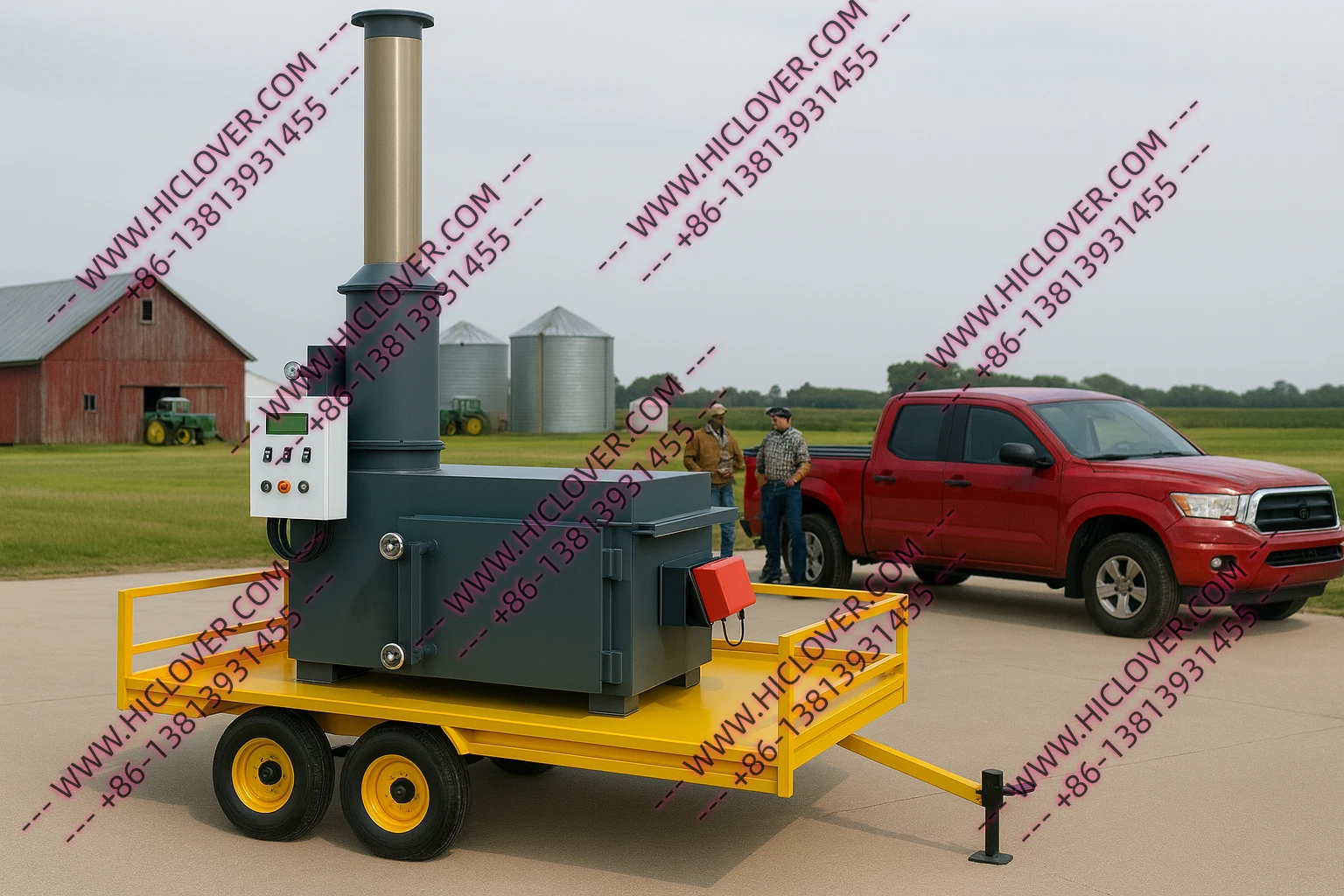
Mobile modular systems provide unmatched flexibility. Factory-assembled and fully tested, these units minimize site civil works and can be relocated as needed, a key advantage for mining or oil extraction camps where waste production and operational sites may shift over time. This level of adaptability distinguishes true manufacturers like HICLOVER from trading companies, offering a combination of rapid delivery and technical assurance.
PLC Automation Versus Manual Control
Automation represents a decisive advantage in modern incineration. HICLOVER integrates PLC-controlled systems across its lineup, allowing precise programming of burn cycles, temperature ramps, and air injection sequencing. This minimizes human error, ensures regulatory temperature thresholds are consistently met, and enables remote monitoring—a vital feature for ESG auditing and decentralized oversight. Manual control remains available for lower-throughput or backup use cases but is increasingly supplemented by digital automation, in alignment with current trends in industrial equipment digitization.
Scrubber System Selection: Dry Versus Wet
Emission control technology selection is influenced by local climate, availability of utilities, and emission targets. Dry scrubbers offer simplicity and lower water consumption, suitable for arid or remote sites. Wet scrubbers deliver superior acid gas removal, often chosen for urban or regulatory-sensitive deployments. Consultation with experienced engineering teams, such as those at HICLOVER, ensures the correct match of performance and operational cost.
Procurement and Deployment: Transactional Guidance for Global Buyers
Factory Direct Supply: Customization and Volume Flexibility
Direct supply from a manufacturer like HICLOVER offers clear transactional benefits over traders or integrators. Factory engineering teams provide customizable chamber volumes—from compact incinerator 1 kg/h price units for laboratory waste to high-throughput hospital and municipal models. This flexibility supports projects across diverse geographies, including Morocco incinerator manufacturer in china procurement pathways and specialized deployments in emerging markets.
Global export capability is anchored by production scale and logistics experience. HICLOVER’s stable supply chain ensures on-time delivery, even under crisis conditions or during disruptive supply events—critical for humanitarian and government tenders demanding resilience.
Engineering Support and Project Experience
Procurement managers benefit from the cumulative experience of HICLOVER’s engineering staff, who have executed projects for animal cremation, medical waste, and special industrial clients worldwide. Technical handover includes commissioning, operator training, and documentation packages tailored for ESG compliance and third-party audit requirements.
For direct consultation or engineering review, the HICLOVER contact portal connects buyers with in-house design and support teams, facilitating transparent technical dialogue and rapid solution development.
Stable Supply Chain and After-Sales Reliability
In a global environment where supply chain resilience is a strategic priority, HICLOVER’s vertically integrated manufacturing and logistics networks minimize risk. Spare parts availability, remote diagnostics, and optional long-term maintenance agreements further differentiate the factory-direct model, underpinning operational reliability over the system’s lifetime.
Conclusion: Meeting Modern Waste Management Challenges with Reliable Engineering
HICLOVER waste incinerators exemplify advanced engineering principles, operational flexibility, and alignment with global regulatory and ESG trends. Procurement managers and decision-makers can navigate complex market options—whether comparing china incinetor systems, evaluating nanjing clover incinerator price structures, or specifying for unique field applications—with confidence in the technical, logistical, and environmental reliability delivered by a true manufacturer. As waste management challenges intensify under infectious disease threats, carbon emission reduction mandates, and the decentralization of critical infrastructure, the selection of robust, compliant, and adaptable waste incinerators becomes a foundational element of risk-managed operations.
Comments are closed